
Our response
to Lucy Powell's recent comments on the future of learning and education reforms
Wednesday 5 August 2026
Powell wants technical, creative and practical routes to carry equal esteem alongside academic ones, rather than being treated as a lesser option. The intervention has divided opinion, with some backing a broader, more inclusive school system and others warning that lowering the emphasis on core academic subjects risks undoing a decade of rising standards. So what would a genuinely wider offer mean in practice, and who stands to gain most if artistic and cultural subjects are finally given the same weight as English, maths and science?
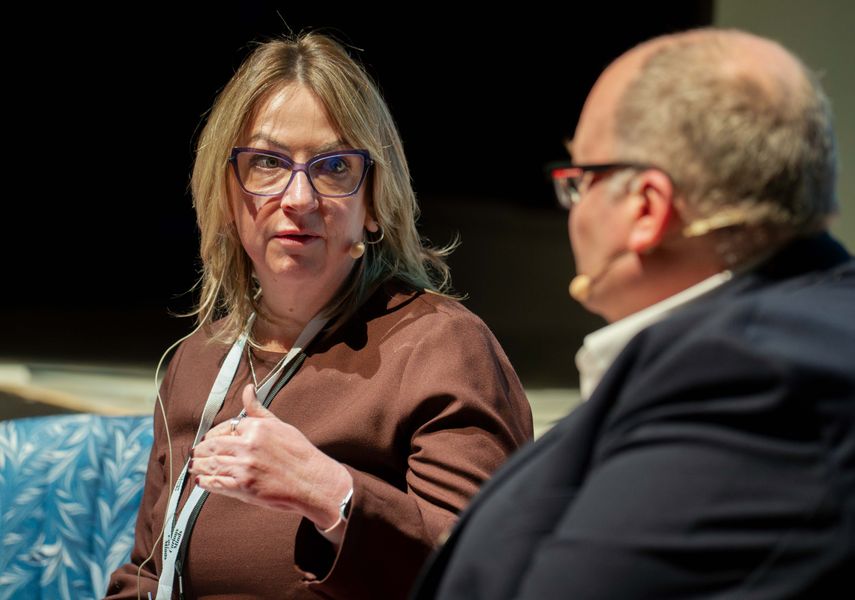
Response from Derri Burdon, CEO of Curious Minds and Co-Chair of the Cultural Learning Alliance
For us at Curious Minds, it was great to hear Lucy Powell's thoughts referring to 'one-size-fits-all' education acting as a straitjacket, because that's exactly what it has felt like for a generation of young people whose talents just don't show up on a maths or English mark scheme.
We see this all the time in our work, that a young person's chance to discover they are brilliant at whichever creative avenue they're interested in, still depends far too much on their postcode. Some schools have the time, the staff and the partnerships to nurture that but too many don't. And when a system only measures one kind of intelligence, it doesn't just fail to spot the rest, it actively tells children with other gifts that they've failed.
That's the very part of this particular debate that gets missed, it's not maths and English versus the rest of the curriculum. It's about acknowledging that creativity, technical skills and practical ability aren't lesser than. In fact, they are the skills a fast-changing economy, and AI, cannot replace. We've long argued that cultural and creative education isn't an add-on to a "proper" education, it is one. A young person who has learned to write and perform, to design and build, and to do those things within teams, is being equipped for work and for life just as much as traditional subjects. And neither option should depend upon where you've grown up.
We welcome Lucy's comments and a government that's willing to look again at what we teach and why, rather than defend a years-old system because it's familiar. The test now is whether that ambition reaches the schools and young people who need it most. Every young person in every postcode deserves the chance to find out what they're good at, and how it could shape their life. That's the change we'll keep pushing for.
Response from Sally Bacon, Co-Chair of the Cultural Learning Alliance
Lucy Powell describes a system in which children have been let down. The Cultural Learning Alliance's own Report Card 2026 shows exactly how that plays out for the arts, and the evidence is stark.
Only 6% of state primary teachers say they have more than two and a half hours of arts timetabled a week, against 47% in independent schools. We know that 43% of primary teachers say their school works with no external arts partner. More than four in ten state primaries have no external arts partner at all. By GCSE, 54% of schools in the most deprived areas enter no pupils for Music, compared with 21% in the most affluent. This isn't a marginal gap; it's a completely different education depending on where a child grows up.
That's why we've long argued that any review of what we teach has to be evidence-led. The Curriculum and Assessment Review and the government response set out important, welcome principles:
- Arts subjects as an entitlement for every child and not just a privilege for some
- More autonomy for teachers to teach well
- A modern curriculum that reflects a modern society and diverse communities
When the Education Secretary talks about a straitjacket, we'd add this: children’s access to the arts has been squeezed hardest of all by that one-size-fits-all measure of success. The removal of the EBacc as a school performance measure was a necessary first step. What matters now is whether the entitlement promised on paper reaches the schools with the least, not just the schools already equipped to deliver it. The gap we document is regional as much as it is social, with access to the arts being at its lowest in the North East and the West Midlands.
We welcome a government willing to look again at the evidence, but an entitlement only means something if every child can exercise it, wherever they live and whichever school gate they walk through. That's what we'll be watching for and supporting as the Curriculum Review moves from principle to practice.
Upcoming events
-
Book now21 Oct13:00 - 18:00